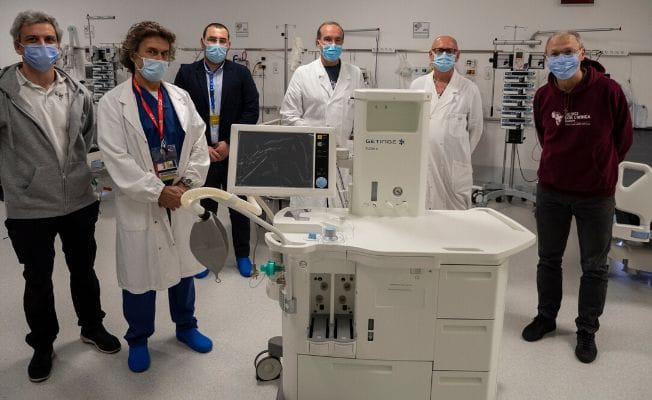
A new ventilator for Schiavonia

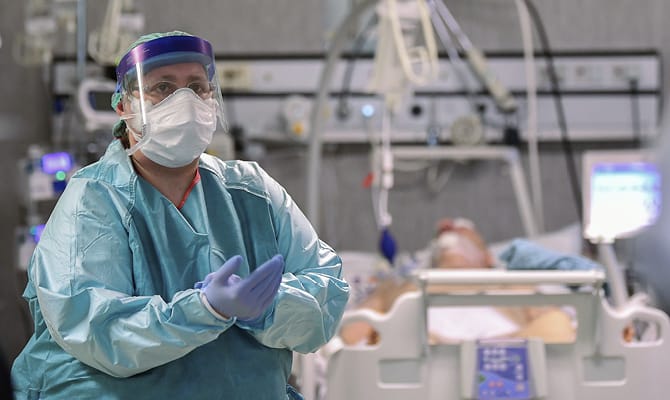
After purchasing, at the peak of the Covid emergency, 4 ventilators for as many Italian hospitals (Schiavonia, Cremona, Carate-Brianza and Parma), Doctors with Africa CUAMM, thanks to the generosity of MSD and of other supporters, today donate a new multipurpose ventilator to the Schiavonia hospital, in the presence of the general manager of Aulss (Local Healthcare Unit) 6 Euganea, doctor Domenico Scibetta, and of Father Dante Carraro. It’s a useful tool for both ICUs and ORs. Very important to tackle the Covid-19 emergency in the Schiavonia reference Covid Hospital, it will also be useful for the future routine emergency work that a hospital does every day.

We would like to thank MSD for believing in this new challenge we offered them and helping us rise to it. It’s the strength of a good deed generating more good deeds, generosity bringing more generosity, sharing what we have with those in need. In this emergency Italy and Veneto have been in need and Cuamm has tried to respond as best as it could – Father Dante Carraro, director of Cuamm, said –. Doctors with Africa CUAMM was founded in Padua 70 years ago. From Veneto, the largest number of doctors and operators has been deployed, we’ve chosen to help once again the Schiavonia hospital for its proximity and to support this challenging Phase 2, directly helping a Covid Hospital.

The collaboration between Doctors with Africa CUAMM, and MSD started many years ago for the purpose of promoting the health of mothers and children worldwide. Together we’ve reached many objectives. In 2019 the collaboration continued with a project in Ethiopia, in the reference area of the San Luca hospital of Wolisso. “With the future in the heart” – the name of the project – has the objective of introducing innovative approaches to reduce mother and child deaths, in addition to supporting the hospital School for nurses and midwives.

The healthcare emergency we’re experiencing has allowed us to value even more the deep meaning of concepts such as care, solidarity, sharing, social responsibility and cooperation: these universal values are helping our Country to restart and continue looking at the future with optimism – Nicoletta Luppi, president & managing director of MSD Italia, claims –. As MSD, we’re committed to offering our help and our competences to keep being close to those people who need them more and to all those people who, with dedication and passion, fight on the front line. We’re doing it via a solidarity marathon thanks to which to date we’ve given donations worth a market value of more than two million Euros. The donation to the Schiavonia hospital, in collaboration with Doctors with Africa Cuamm, also goes in this direction. Doctors with Africa CUAMM, is a partner we’re proud of having on our side in the Wolisso project – launched as part of MSD for Mothers – and which has always proven to be engaged on the field with a long-term view, to positively affect the life of people, meet their healthcare needs and make the difference in their lives.

And the general manager of Aulss 6 Euganea, Domenico Scibetta, when thanking for the gift, also added:

This ventilator is a unique machine in Italy, it allows us to inject oxygen electronically rather than manually. It really makes the difference between life and death.

Now the biggest challenge, for CUAMM, remains Africa, where we’ve been engaged for 70 years, convinced that “health is a right, fighting for its respect is a duty”.


A RESOURCE OF INESTIMABLE VALUE

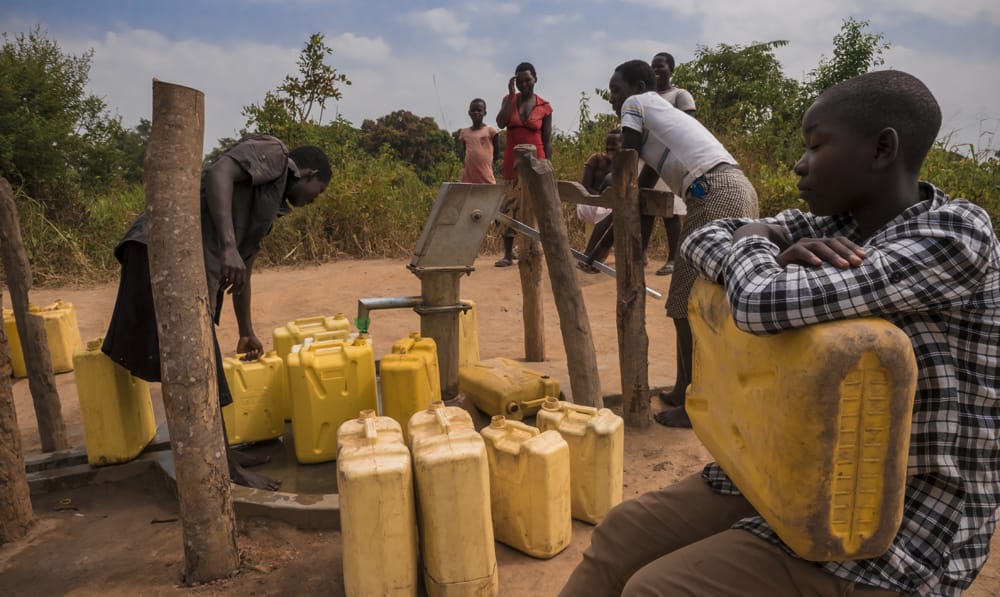
Never before this year of pandemic, have we realized the importance of water for the health system. We want to remember it today, on the World Water Day: we may take such resource for granted in our hospitals in Italy, where there is no problem of supply, but water becomes crucial in Africa where its scarcity is a daily challenge in addition to many other difficulties, as the threat of Covid-19.

“The health staff of the Princess Christian Maternity Hospital in Freetown, Sierra Leone, has to cope with water shortages everyday. Water is essential for preventing and controlling infections but also for the hospital’s routine activities, such as cleaning, childbirth assistance, surgical interventions and activities in hospital wards and clinics – says Claudia Caracciolo from Doctors with Africa CUAMM – ”. “CUAMM guarantees a constant supply of water to the hospital two or more times a week – continues Claudia – but the demand is so significant that the supply is not always sufficient and often the relatives of hospitalized patients have to bring a bucket of water for personal use”.

Even in Angola, where droughts are increasingly frequent and last long, water shortage affects health services but also the food security of the whole country.

“During the rainy season (November-April), it has rained a maximum of 4 times – says Marta Piccolo, area coordinator in Chiulo -. It was incredible to see the streets invaded by herds and shepherds, forced to move for hundreds km due to drought, in search of water. They’re coming back now because it started raining 2 weeks ago. “

In Chiulo, Doctors with Africa CUAMM signed several contracts with water suppliers to cover the needs of the hospital and the maternity waiting homes: 3 tanker trucks, which carry 22,000 litres of water a week. Now the goal is to try to ensure water supply to other health centers as well.

“In the Mucope area, out of 8 health centers, only 3 have access to safe water resources via a solar panel pump. Some are close to the river and the water is collected from there. Another one is located near a company that produces rice and that provides it with water when necessary. The municipal tanker truck that should supply the HC often does not arrive because it has no petrol or it is broken – says Marta -. CUAMM, supported by Manos Unidas and in collaboration with the municipal administration, will install tanks in the health centers where they are lacking to guarantee the supply of water ”.

World Water Day reminds us that water should not be taken for granted and encourages us to take action in order to make water increasingly available to those who need it most, so as not to endanger the lives of millions of people.


Mozambique and Coronavirus Three voices, three fronts of commitment

In Mozambique Covid-19 victims aren’t reported yet, but there are 41 confirmed cases out of a thousand tested suspects. Very low numbers for a country of thirty million inhabitants, whose capital city, Maputo, the most severely hit area at the moment, is not far from the border with South Africa: the most affected country to the south of the Sahara desert, with over 3,600 notified cases. With just one lab which can confirm virus positivity at a national level and the awareness that half the cases are asymptomatic, it’s highly likely that the numbers don’t represent the real circulation of the virus in the Country.

Doctors with Africa CUAMM has been working for over one month and a half in close collaboration with the Mozambique ministry of health, both at a national and provincial level, joining technical meetings to organize a response to coronavirus that puts prevention first, as Laura Nollino, endocrinologist who arrived in Mozambique one year ago to cure diabetes, explains:

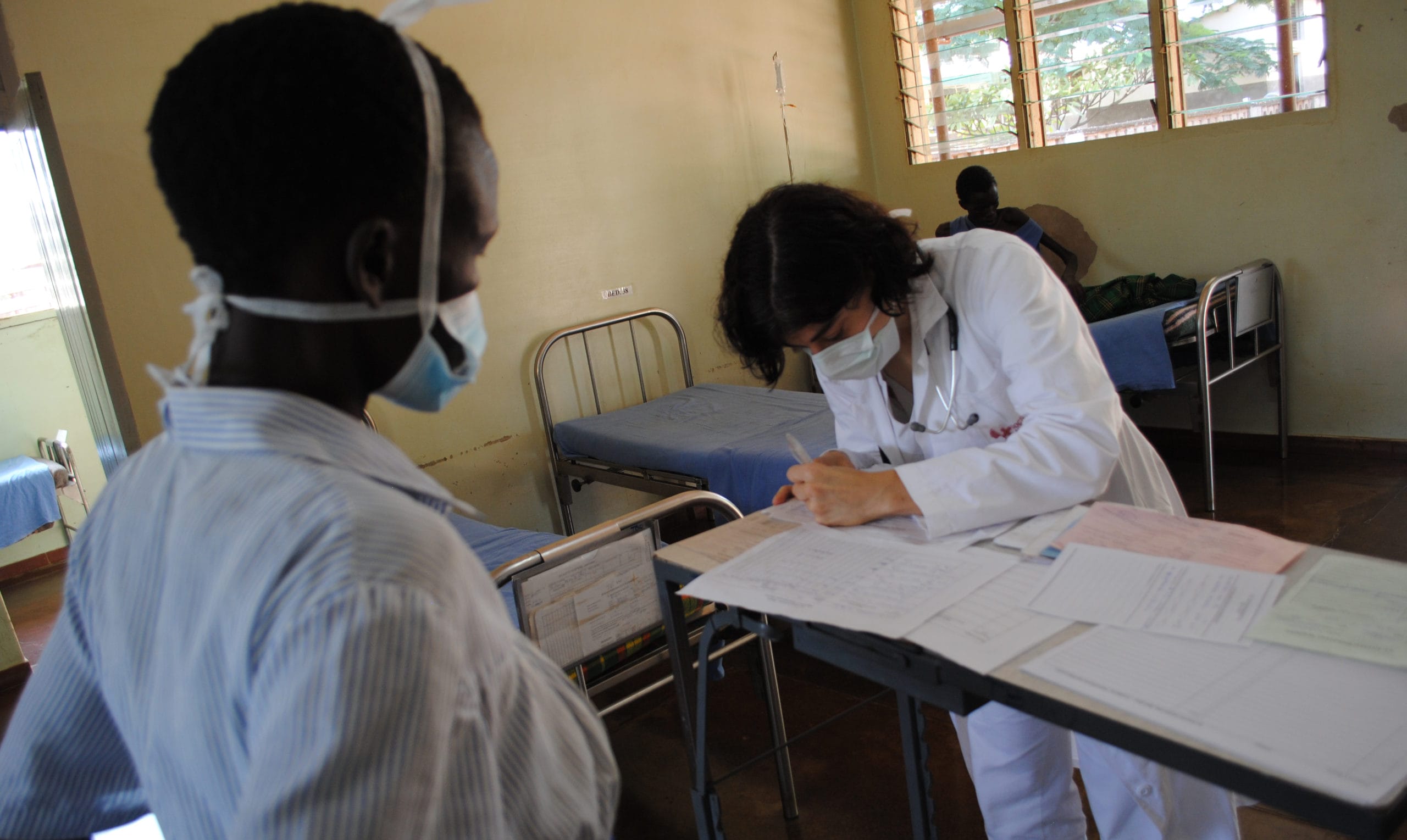
«We have a time advantage that we have to use in the best way in order not to be overwhelmed by the epidemic. We’re trying to use it to look for containment measures of the virus and protection of the healthcare staff, who don’t have to get sick. Here, too, maybe more than in Italy, it’s difficult to find face masks and other simple but essential tools to prevent the spread. The minister of health has declared that there are 34 ventilators in the country, they’re important but we don’t believe that they’re the solution: there could be even more, but doctors who can use them would be missing. In the Country there’s less than one doctor every 10,000 inhabitants and I wouldn’t be able to use a ventilator, because I’m not a resuscitator specialist. That’s why prevention and training are the key to avoid a disaster».

Giovanna De Meneghi has been in Mozambique for two years, after living in post-Ebola Sierra Leone and as country manager she’s responsible for the coordination of project which are still active in the provinces of Tete, Sofala and Cabo Delgado, in addition to the support to the district healthcare activities of Maputo, Zambezia and Nampula. Like the other colleagues she works from home, limiting social contacts and outings:

«It’s very strange and a little tiresome. Last first of April the government declared, for the first time since the peace of 1992, the state of emergency: movements are limited and in public places, or when it’s not possible to assure the distance of one and a half metre, everyone must wear face masks aka mascaras caseiras of capulana made according to the indications of the WHO. One year ago we were in the middle of the management of the emergency linked to the cyclones Idai in Sofala and Kenneth in Cabo Delgado, which had destroyed houses, healthcare centers and hospitals, in addition to causing more than 600 dead people and many displaced people. Now we’re in the middle of a global emergency: there years are intense for Mozambique».

The state of emergency hasn’t currently resulted in a total lockdown of the activities, the same as in other African countries, which have imposed lockdowns on business activities as well. Edoardo Occa, anthropologist and manager of the community activities of Doctors withAfrica Cuamm, explains:

«An African city lives off informal, street economy. Preventing people from selling and meeting on the street is a problematic choice, which may have an immediate impact of economic revenues of many families who take life one day at a time».

In the communities a network of 500 operators

Edoardo Occa joins on behalf of Doctors with Africa CUAMM the technical meetings on the topic of community health:

«As CUAMM – he explains – we can count on a network of 500 operators who already work with us in their original communities to fight HIV and favour mother andchild health».

This precious network was created to spread awareness-raising messages on coronavirus, working in small groups to fulfil social distancing. The virus doesn’t just change social habits, but also the approach to the community. Occa continues:

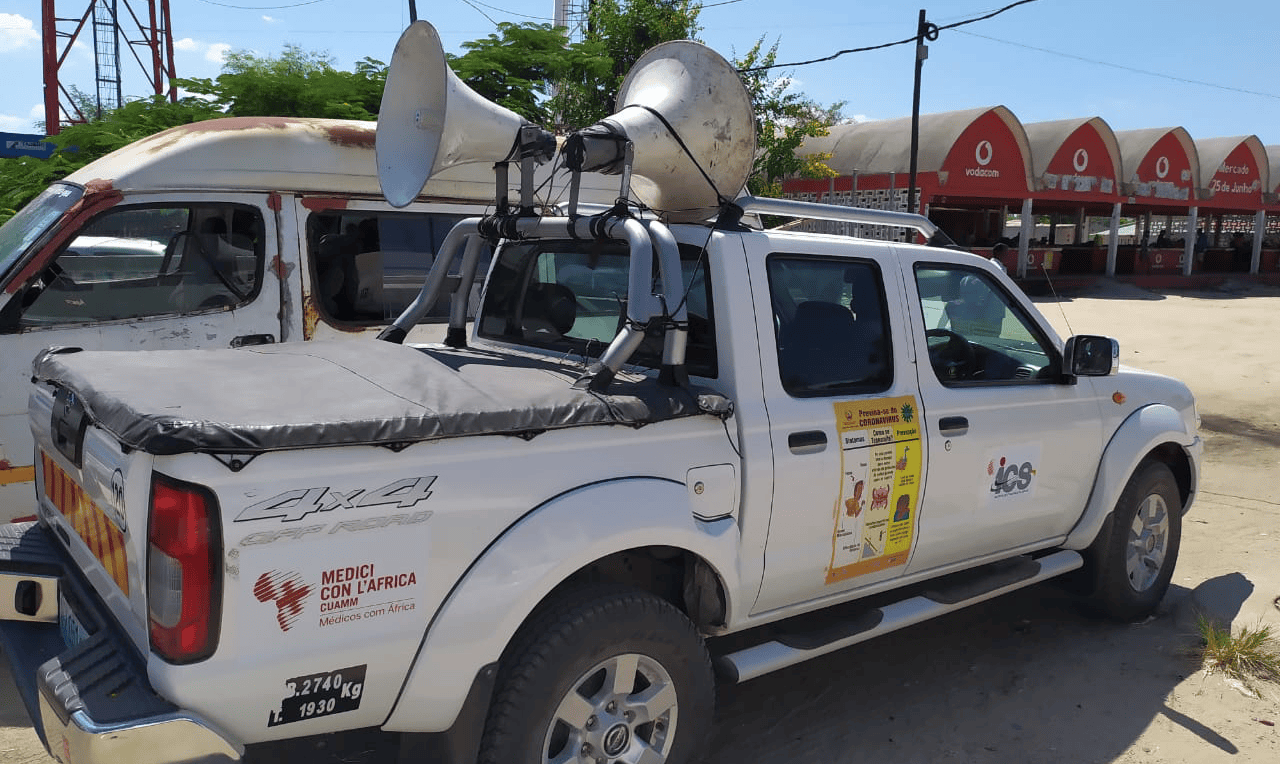
«While before the operators went from home to home to meet people, today we’ve had to change strategy, to limit contacts.. We’ve made radio commercials which are broadcasted in seven different dialects, to reach everyone, and we’ve equipped our cars with loud speakers, driving around the districs of Beira, Tete or Quelimane spreading the  recommendations on Covid19. At Cabo Delgado a positive collaboration was established: the Islamic council of the city has allowed us to broadcast the messages on the loudspeakers of the minarets».

In addition to the fight against the fake news on the virus and the preparation of new replacement practices for the rituals linked to birth and death, many other habits need to be reviewed, in Mozambique like the rest of the world. For example we’re working, together with the ministry of health, on the creation of the position of the “epidemiological sentinel” – a community operator who will be a reference point for the village and will filter suspect cases and healthcare facilities, directing to the hospital only those people who are really at risk and following people at home, so that with the movements between villages and healthcare facilities the virus doesn’t spread excessively.

«Many of these operators are just volunteers – Edoardo Occa tells – and carry out these new jobs, which often expose them to risks, with an admirable spirit of service for the community. We have to convince people to change habits: it’s hard, for all. In many cases the virus will call into question consolidated power systems in the communities, but people are changing their habits and having many motivated and influential operators by our side for us is essential right now».

Italy seen from Mozambique

«Always thinking about the post-cyclone situation of one year ago – Giovanna De Meneghi tells – it comes to my mind how Italy promptly helped us, sending aid and economic support. Now, at least as concerns family and friends, we have to help to understand how to move, how to live in a state of emergency. As NGO workers we’re more used to situations of this kind: uncertainty and suspension in fragile settings are frequent. Now everyone worldwide has to get used to a new normality».

«As a doctor – Laura Nollino admits – when the epidemic in Italy was at its peak I seriously thought to return to Italy, to make myself useful. This emergency has affected us all: our families are often in Lombardy and Veneto, it wasn’t easy to decide to stay. Then I understood that it would have been equally useful to remain here, to prepare to a wave which could arrive. And then the virus is not the only problem: we’ve redesigned the projects to also tackle the virus, my specialization was diabetes and patients continue to need cures, like HIV-positive people, or pregnant women who must deliver at the hospital. It’s also right to remain for them, in addition to the healthcare staff we work with, they are essential and we have to train them and protect them from the virus as much as possible».
CUAMM and Caritas Pro Vitae Gradu Charitable Trust

Nowadays, maternal mortality is still unacceptably high. About 295 000 women died during and following pregnancy and childbirth in 2017. The vast majority of these deaths (94%) occurred in low-resource settings, and most could have been prevented. Access to quality health services for mothers and children in Sub-Saharan Africa is still a major challenge.
Doctors with Africa CUAMM, thanks to the support of Caritas Pro Vitae Gradu Charitable Trust, is working every day to ensure mothers and children in Angola and Ethiopia are not left behind.
In Angola, Caritas Pro Vitae Gradu Charitable Trust is working with CUAMM to support to Chiulo Catholic Hospital, in Cunene Province. With its 234 beds, the Hospital of Chiulo, located in the comuna of Mucope, is a private not for profit (PNFP) health facilities owned by the Dioceses of Ombadja and is the referral health facility for the entire Municipality (about 306.550 people, 61.300 children <5, 15.300 expected pregnant women, about 2.300 expected major direct obstetric complications).

CUAMM’s program focuses on increasing access to quality maternal, newborn child and nutritional services in its catchment areas, with a specific focus on emergency obstetric care.

In Ethiopia, CUAMM and Caritas Pro Vitae Gradu Charitable Trust are working together to empower women in rural communities to improve access to basic healthcare services South Omo zone, an area where the population is semi-nomadic and neonatal, infant, and under-5 mortality rates are above national average. The specific project objective is to increase demand and access to quality maternal, neonatal and child health services empowering and raising awareness of women living in rural areas.

Finally, in light of the current COVID19 emergency, Caritas Pro Vitae Gradu Charitable Trust is also supporting CUAMM to manage preparedness and response plans in Cuamm’s countries in Sub Saharan Africa in order to stop further transmission of the virus and specifically mitigate the impact of the outbreak. More specifically, through the foundation support, CUAMM secured international stocks of PPE materials and healthcare equipment to protect health personnel enabling them to provide the best care possible to patients.


COVID-19 EMERGENCY RESPONSE PLAN FOR ITALY AND AFRICA

[fusion_builder_container hundred_percent=”no” equal_height_columns=”no” menu_anchor=”” hide_on_mobile=”small-visibility,medium-visibility,large-visibility” class=”” id=”” background_color=”” background_image=”” background_position=”center center” background_repeat=”no-repeat” fade=”no” background_parallax=”none” parallax_speed=”0.3″ video_mp4=”” video_webm=”” video_ogv=”” video_url=”” video_aspect_ratio=”16:9″ video_loop=”yes” video_mute=”yes” overlay_color=”” video_preview_image=”” border_size=”” border_color=”” border_style=”solid” padding_top=”” padding_bottom=”” padding_left=”” padding_right=””][fusion_builder_row][fusion_builder_column type=”1_1″ layout=”1_1″ background_position=”left top” background_color=”” border_size=”” border_color=”” border_style=”solid” border_position=”all” spacing=”yes” background_image=”” background_repeat=”no-repeat” padding_top=”” padding_right=”” padding_bottom=”” padding_left=”” margin_top=”0px” margin_bottom=”0px” class=”” id=”” animation_type=”” animation_speed=”0.3″ animation_direction=”left” hide_on_mobile=”small-visibility,medium-visibility,large-visibility” center_content=”no” last=”no” min_height=”” hover_type=”none” link=””][fusion_text]The Covid-19 epidemic has shown that we’re all bound to one destiny.

Doctors with Africa CUAMM has taken action to support some healthcare facilities in Italy, while preparing to contrast and prevent the virus from spreading in Africa, where it could have ravaging effects.

IN AFRICA: FACING THE EPIDEMIC IN 23 HOSPITALS

The most urgent commitment is to secure the 23 hospitals that we support in 8 countries, ensuring:

  • Personal protective equipment (PPE) to healthcare staff and the operators involved in the emergency management
  • Personal protection equipment for cleaning staff and disinfectant materials for interiors
  • Minimum equipment for diagnosis and clinical management such as infrared thermometers to screen patients, oximeters to measure the status of blood oxygenation and oxygen concentrators for the supply of oxygen
  • Extraordinary commitment in the training of operators and the involvement of the communities, to promote proper behaviours and hygienic and protection norms.

The challenge is very high and adds to the effort to assure the ordinary planned activities to provide the essential care to mothers and children.


DO YOUR PART!

15€    DISINFECTANT MATERIALS OF THE HEALTHCARE FACILITIES

Disinfectant detergents for interiors and waste bags for infected waste for 1 day

30€    PERSONAL PROTECTION EQUIPMENT KIT FOR HEALTHCARE STAFF

for 1 doctor or nurse for 1 day: mask, goggles, gloves, boots and alcoholic disinfectant solution

50€    TRAINING AND SALARY FOR A COMMUNITY ACTIVIST

100€  DIAGNOSIS AND CLINICAL MANAGEMENT OF THE PATIENT

Aid for the purchase of infrared thermometers, oximeters and oxygen concentrators[/fusion_text][/fusion_builder_column][/fusion_builder_row][/fusion_builder_container]


IN ITALY

4 ventilators for 4 hospitals

Doctors with Africa Cuamm has donated 4 ventilators to some of the healthcare facilities particularly affected by the epidemic:

  • The Schiavonia hospital (Padua) which has been recently declared “Covid hospital”
  • The Carate Brianza hospital (Milan)
  • The Parma hospital
  • The Cremona hospital

Professionals, who are first of all friends, work in each of these facilities and we wish to encourage and support them in their challenging engagement. These professionals are also our ambassadors, ensuring that our aid will be used for the right purpose.

An act of closeness, to give our thanks to many people and communities that in other moments of need on the field, in Africa, have never lacked attention, helpfulness and great generosity.


CUAMM becomes a UNHRD partner

As of today, Doctors with Africa CUAMM is a partner of United Nations Humanitarian Response Depot (UNHRD), a network of six UN humanitarian emergency response hubs part of the World Food Program (WFP). This agreement gives CUAMM free access to many of the agency’s services to respond more quickly to emergency situations in Africa.

UNHRD is among the services that the UN World Food Program makes available to the global humanitarian community through six logistical hubs in six strategic points in the world: Brindisi (Italy), Accra (Ghana), Dubai (United Arab Emirates), Kuala Lumpur (Malaysia), Panama City (Panama), and Las Palmas (Spain). This network offers partner organizations a wide range of logistical services for emergency preparedness and response, including storage, purchase, and shipping, letting different agencies and humanitarian organizations respond quickly in crisis scenarios around the world.

Doctors with Africa CUAMM already has deep familiarity with African health systems and is able to intervene even in emergency situations when needed, as happened with Ebola in Sierra Leone and with the Cyclone Idai in Mozambique. Now it can count on UNHRD services to respond even more quickly and effectively in humanitarian crises.

This agreement is all the more important right now. In recent weeks, Doctors with Africa CUAMM has started to equip its hospitals to fight the spread of coronavirus in the already challenging context of Africa.

Through Doctors with Africa CUAMM’s partnership with UNHRD, it will have access to warehouses in Brindisi, Dubai, and Accra to store its material to send to the field with facilitated logistics. It will also be able to procure basic necessities with more efficient procurement procedures recognized by the Directorate-General for European Civil Protection and Humanitarian Aid Operations (DG ECHO). This is a major step for transparency and efficiency given the challenges that the coronavirus and other possible emergencies pose for Africa.


Africa-Italy: one humanity

Dear all,

an explosion of joy, of life, of celebration – I cannot take these feelings away from my heart, even if they clash with the deep estrangement we all feel in Italy in these hours. I’ve just landed in Rome on my return, via Addis Abeba, from South Sudan. I’ve visited some of our work places there, the hospitals of Rumbek and Yirol. I feel a lot of gratitude for the great and tiresome work that our volunteers do, together with their local colleagues. However, where I was overwhelmed by emotions was in one of the remotest and most forgotten places of the Country, Nyal, 40,000 people, in the State of Unity.

The locals were all there, waiting for us to arrive. The whole community had gathered to “celebrate” the new operating room annexed to the modest healthcare centre. There had never been one before. Now, eventually, moms can give birth without fear of losing their life. The chief of the community thanked us and asked us not to abandon them. I answered that for us “TOGETHER” is like a blood oath. “When we start, we stay” I added, looking into his eyes and feeling a heavy responsibility.

Health really is physical and inner “life”, energy and joy. When you’re unhealthy you feel “dead”, tired, sad. Health is creativity, desire, movement. When you’re unhealthy, you stop, there’s no development and growth. Returning to Italy, with the cities deserted and the hospitals of some of our regions working at their capacity, I’ve perceived this mood heavily. “Coronavirus” has infected our country and we’re sick, forced to rest, sheltered at home, obliged to stop. Closed shops, blocked activities, suspended offices and meetings. The weakest ones surrender and the economy collapses.

Life is a woollen thread, the line between one part and the other of the world is narrow, thin. Finding oneself on “one part” or “the other” is a matter of seconds. Humanity is just one. That’s why our gaze, that has been focused on Africa for 70 years now, today is also watching our country, participating in the challenging and hard moment we’re facing. So, in Italy, we want to be close to the elderlies who fear for their health and who find themselves even more alone facing a hard daily routine of isolation and scarcity of relations, that’s why we’re setting up a network of our local volunteers and groups. We’re still supporting the many doctors who have returned and are now working in the hospitals of our country with the same passion and competence they put in Africa. We feel the duty to give real help, selecting an especially needy healthcare facility and supporting it.

And then in Africa, where support, care, operators are always running low, there are still few assessed Covid-19 cases, but they are set to grow and we must be prepared. We’ve just heard this morning the news of the first suspected case of the disease at the hospital of Wolisso, in Ethiopia. The alert of our operators is at its highest. We must do all we can to protect the operators and contain the epidemics. The risk of failing is very high, because the healthcare systems are extremely fragile and it’s not possible to guarantee intensive treatments to sick patients, the wards are not well equipped! That’s why we’re handing out PPE in the 23 hospitals in which we are present (gloves, alcoholic gel, masks, coats, linen), preparing containment plans, training the many healthcare operators, also in the communities, on hygienic and protection rules, working with the national governments to prepare guidelines and suitable procedures to contain the epidemics.

Francesco Canova, founder of Cuamm, in January 1946 was in transit at the railway station of Caserta and, scared by the destruction he saw around him, he asked the station manager if all of Italy was like that. And that “little ill-dressed man” answered him: “Even worse, son, even worse. But don’t fear, you’ll see that things will get better soon, trust Gennarino!” (Christian sympathy and testimony, Messaggero, Padua 1983).

In this challenging time, in Italy and in Africa, we have to nurture the trust of the heart and the perseverance of the work!

I embrace you and thank you for all the help you can give us.

Don Dante Carraro, Director of Doctors with Africa CUAMM


The importance of male involvement

Within the broad spectrum of child health intervention, one of the aspects that both research and field based implementing agencies are focusing on is male engagement.

Doctors with Africa CUAMM is making efforts to integrate meaningfully men’s participation into health services and programmes, especially with regards to nutrition programs. Indeed, even if men are not directly involved in feeding children or taking them to health facilities, they are often the ones administering household’s finances or giving women permission to take part to community nutrition activities. Among barriers that men face are: lack of time and flexibility due to work, cultural habits and belief around the role of women in taking care of children, and a health system that is designed to be accessed mainly by women.

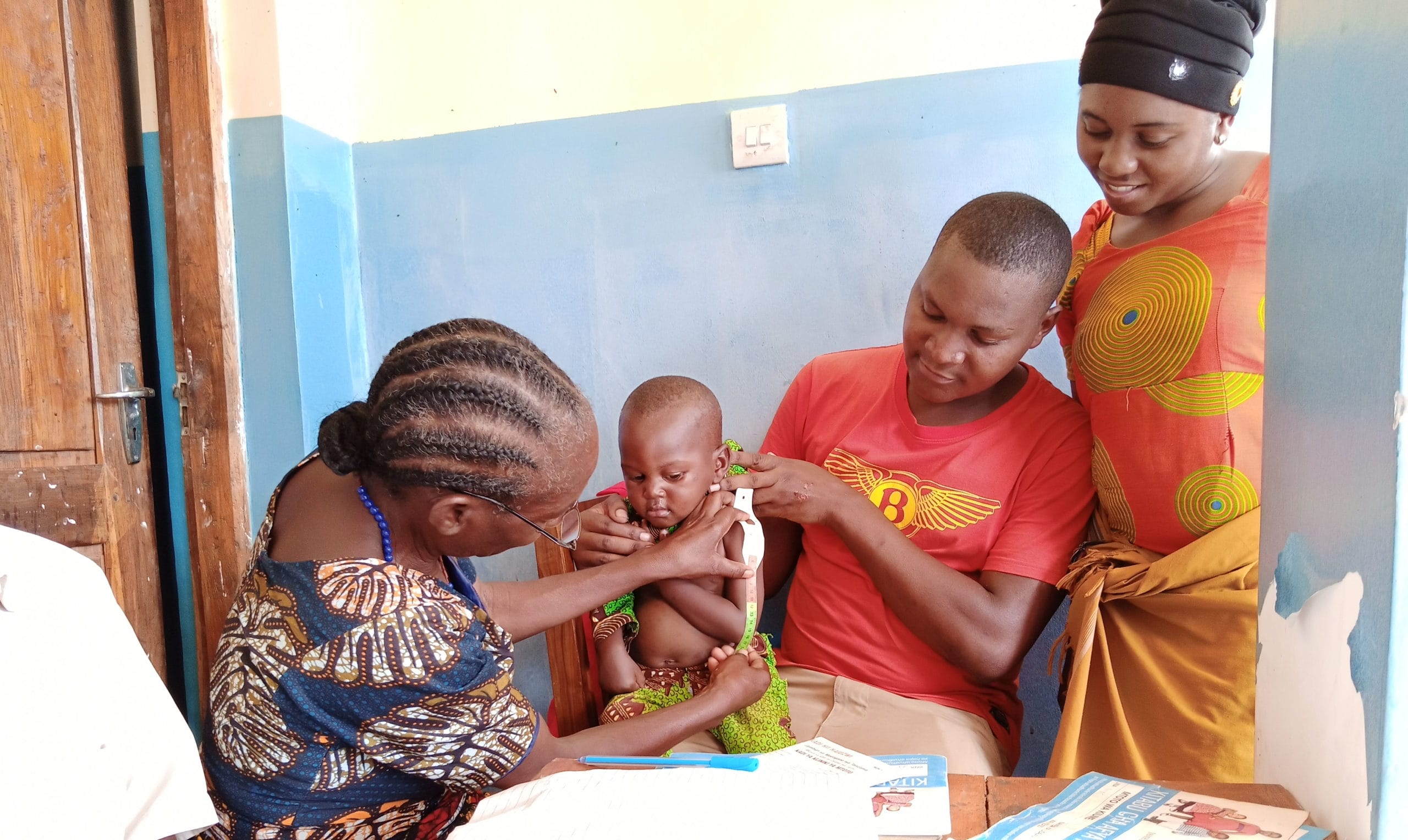
In Tanzania, in the region of Iringa and Njombe, Doctors with Africa CUAMM is implementing a program that aims at contributing to the reduction of prevalence of stunting. The program intends to create awareness on nutrition related and early childhood development issues to ensure mothers/caregivers of children under two access better health, nutrition and ECD services and fathers are well involved and participate from the very beginning in child upbringing.

Ally Yahaya Nyaulingo, 30 years old, father of Clayan who is 1 year old and seven months, is among the beneficiaries of the project and member of a counselling group in Kising’a village in Iringa DC. He has been participating in community sessions as he saw the importance of his involvement in the proper upbringing of his child with constant awareness provided by facility health care workers during clinic sessions as well as by Community Health Workers during community group counselling sessions.

I love and care for my family. I have seen other children whose fathers were not responsible and their health had deteriorated with severe malnutrition and from there I saw the importance to participate and support my wife in the upbringing of my children by attending counselling group sessions and by sending my child to village health and nutrition days with my wife.  By doing so I am in the position to understand the nutrition status and progress of my child. I want to ensure my child stay healthy, bright when starts school and not stunted or severely malnourished”.

He has advised his fellow fathers to self-recognize the responsibilities fathers have in ensuring a healthier family. Men are very much dealing with negative norms and taboos in supporting their wives on matters related to taking care of children. Having peer men counselling groups during these events would create a room for them to be more educated and discuss all issues related to positive parenting and responsive caregiving”.

COVID-19: humanity is just one

In these days we’re carefully following the evolution of #Coronavirus in Italy. We’re close to the many people who have been affected and to the more vulnerable ones, who are especially exposed to contagion. Likewise, we’re close to the healthcare operators who are in the front line tackling the epidemics.

Many of them include the doctors and nurses who came with us to Africa or were preparing to. In these hours they’re experiencing a situation of hard fatigue, facing a virus we know little of. Many are giving their contribution of knowledge and experience that they have gained when managing healthcare epidemics in limited-resource settings, where the scarcity of supports forces them to deal with challenging choices on a daily basis.

We can’t help but show solidarity to them and respect to those who have to make important decisions with not enough scientific evidence available. As healthcare operators we reiterate that in order to reduce the epidemics and restrain its impact on the Italian healthcare system, we can all do something: comply with the measures of containment and social distancing, reduce our movements, stay home.

A few days ago, don Dante Carraro, contacted in South Sudan, told the daily paper Il Mattino di Padova:

Venetian people are able to express stubbornness, quiet wilfulness and such strength that has allowed us to pick ourselves up in the challenging post-WW years, in the years of the economic crisis and in other dramatic situations. We have to keep going, without leaving anyone behind, without forgetting the most in need. Veneto and Italy as a whole will make it. United we will overcome any challenge and there’s no real development if we leave someone behind. We live in one world, it’s a system of communicating vessels. We used to fear the diseases that others would spread, now instead we risk being the spreaders of contagion. The world is one, humanity is just one and there must be one development project which involves everyone. This is the only way we can keep going.

This emergency will also pass thanks to the responsible contribution of each of us!
 
DONATE NOW

A VACCINE FOR “US” ALL

[fusion_builder_container hundred_percent=”no” equal_height_columns=”no” menu_anchor=”” hide_on_mobile=”small-visibility,medium-visibility,large-visibility” class=”” id=”” background_color=”” background_image=”” background_position=”center center” background_repeat=”no-repeat” fade=”no” background_parallax=”none” parallax_speed=”0.3″ video_mp4=”” video_webm=”” video_ogv=”” video_url=”” video_aspect_ratio=”16:9″ video_loop=”yes” video_mute=”yes” overlay_color=”” video_preview_image=”” border_size=”” border_color=”” border_style=”solid” padding_top=”” padding_bottom=”” padding_left=”” padding_right=””][fusion_builder_row][fusion_builder_column type=”1_1″ layout=”1_1″ background_position=”left top” background_color=”” border_size=”” border_color=”” border_style=”solid” border_position=”all” spacing=”yes” background_image=”” background_repeat=”no-repeat” padding_top=”” padding_right=”” padding_bottom=”” padding_left=”” margin_top=”0px” margin_bottom=”0px” class=”” id=”” animation_type=”” animation_speed=”0.3″ animation_direction=”left” hide_on_mobile=”small-visibility,medium-visibility,large-visibility” center_content=”no” last=”no” min_height=”” hover_type=”none” link=””][fusion_text]

Ensuring Africa’s access to COVID-19 vaccines is critical for containing the pandemic. Global emergencies demand global responses, and Africa cannot be left out.

We join civil society, governments and institutions that ask for it: It is right to suspend the patent on vaccines.

A global pandemic is happening and vaccination doses are not enough, here and in Africa. To date, Covax, the initiative aimed to provide vaccines to poor countries, has enough doses for only 5% of the 1.3 billion people on the African continent. More doses are needed. The suspension of the patent would allow the various production centers (India and Brazil in particular) to increase quantities, thus dampening the vaccine market. And it is urgent to avoid the development of new variants that risk frustrating current vaccines.

A vaccination program is clearly imperative there as well: not only is it the right thing to do, it will also help ensure everyone’s wellbeing, as it is the only way to put an end to the spread of this virus and its variants.

And the first vaccines are now on their way. Just days ago, Prime Minister Carlos Agostinho do Rosário enthusiastically announced the arrival of the first 200,000 doses of vaccines to Mozambique. Ghana has received 600,000, and Senegal 200,000, marking the start of a more hopeful period for the continent, which will require at least 1.3 billion vaccine doses by the end of 2021 in order to ensure a sufficient level of immunity among its population.

Now these doses must be transformed into “actual shots in the arm”, first and foremost for our many local colleagues, doctors, nurses, midwives and health support staff (for example, administrators, drivers and cleaners). As we’ve seen in Italy, these individuals are the core of health systems everywhere, selflessly putting themselves on the front line and at high risk of exposure to the virus as they work to combat its effects on the sick.

And there are so many of them, starting with those nearest to us: the colleagues, from doctors to community health workers, with whom we work side by side in 23 hospitals, 127 districts and numerous peripheral health facilities. Altogether there are around 20,000 of them in the African countries where CUAMM maintains a presence, accounting for 5% of the continent’s total health workers. It is our priority commitment – with your help – to get each and every one of them vaccinated as soon as possible.

The communities in which most of Africa’s people live, including those in the most remote areas, must be vaccinated as well, of course. Meeting this objective will require a great deal of work, for example, ensuring well-functioning logistics (including the cold chain that makes it possible to maintain minus 3 to 4 degrees Fahrenheit temperature conditions) as well as other resources – syringes, cotton wool, alcohol, staff training– that cannot be taken for granted in low-resource settings. There is also the challenge of making vaccination culturally acceptable to communities, which will require public health campaigns. Since we do this work daily, we already have the essentials – vehicles, motorbikes, generators, solar panels, cooler boxes, and personnel – but now need to ramp up. We will tackle the job as always, not as do-it-all “superheroes” eager for the spotlight, but as sober, dependable health professionals doing our level best to meet the needs of communities and help overcome the vulnerabilities of healthcare systems that, already weak prior to the pandemic, now risk total collapse. And we will support our local partners, whether at the central level (Ministries of Health) or the peripheral one (districts and individual facilities) by working with them.

We’d like to ask for your generous participation, in the form of a symbolic €10 contribution to deliver a single dose of COVID-19 vaccine to the countries where CUAMM is present in Africa, to help us get vaccines into the arms of our 20,000 colleagues there. The cost for meeting this initial challenge – vaccinating each individual fully (two doses) – is €400,000, but we hope to vaccinate many more thereafter.

Our appeal goes out to everyone, including individuals both young and older, groups, foundations, public and church institutions and international media and partners. We need all of you, because only together will it be possible to undertake such a major challenge. The renowned immunologist Alberto Mantovani is the first official supporter of our appeal.

Recently a CUAMM mission returned from Mozambique. While still there, one of our Italian doctors who had already received his vaccine was speaking with a young Mozambican colleague. The latter quietly confided in the former: “You’re so fortunate to have been vaccinated! I hope to be soon too”.

Thank you for helping us out with whatever you can. It will mean a vaccine not only for our young colleague in Mozambique, but also for “us” all.

Father Dante

Donate now

[/fusion_text][/fusion_builder_column][/fusion_builder_row][/fusion_builder_container]